
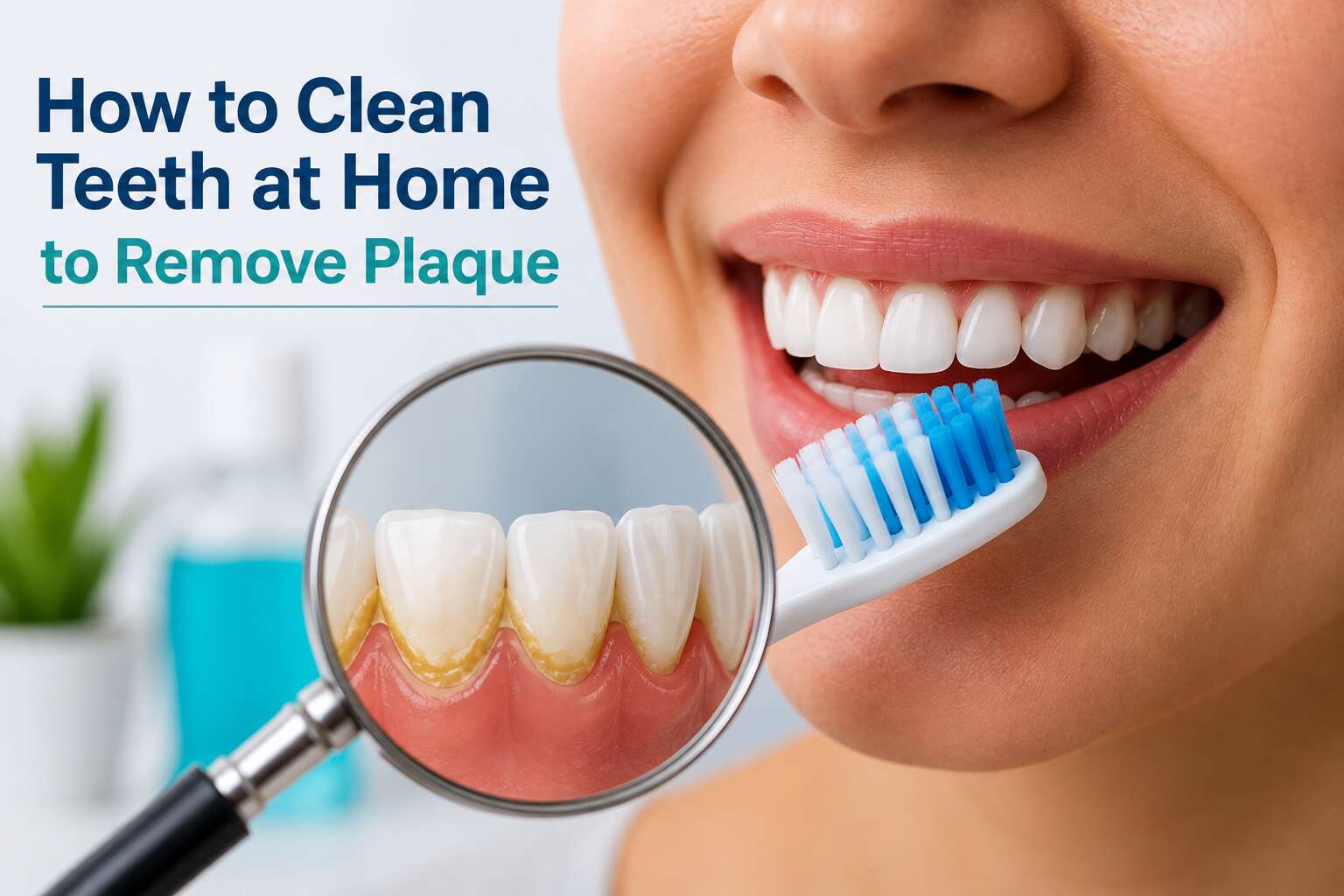
How to Clean Teeth at Home to Remove Plaque: Simple Steps That Work
Have you ever brushed your teeth and then still noticed a rough, kind of sticky feeling on them later in the day? That can be plaque, a soft coating that shows up naturally on your teeth. It tends to build up near the gumline, and also between the teeth, particularly if certain spots get overlooked during everyday brushing. If you’re asking yourself how to clean teeth at home to remove plaque, the reply isn’t “scrub harder” or depend on harsh diy fixes. Plaque management is really about a few easy routines you keep doing consistently. In this walkthrough, we’ll go over the best ways to clean your teeth at home, which common remedies help and which ones don’t, how plaque is different from tartar, and when you might actually need professional dental support.
What Is a Dental Plaque?
Plaque is kind of a sticky layer made from bacteria, saliva, and bits of food debris. It starts building up again pretty quickly after you clean your teeth, which is why daily oral hygiene matters..
Plaque tends to gather near the gumline, between teeth, and also in those awkward spots that are hard to reach. When it sits there too long, it may play a role in tooth decay, persistent bad breath, and inflammation of the gums.
The good news is that soft plaque can generally be controlled with proper home care.
How to Clean Teeth at Home to Remove Plaque
If you're looking for how to clean teeth at home to remove plaque, focus on technique and consistency rather than aggressive cleaning.
Brush Twice a Day
Brush twice daily with a soft-bristled toothbrush and fluoride toothpaste. Clean the outer, inner, and chewing surfaces of your teeth using gentle, short movements.
Brushing harder does not mean better cleaning. Too much pressure can irritate the gums and contribute to tooth wear.
Clean Along the Gumline
Plaque often builds up in the areas where the teeth and gums meet. The toothbrush needs to be angled slightly towards the gums to clean this spot.
If the gums tend to bleed while you brush, do not increase the pressure on them by brushing harder.
Clean Between Your Teeth
There will always be places between the teeth where the toothbrush won’t go. Brush or use an interdental brush daily to remove the plaque and food stuck in these spaces.
In case you find it challenging to floss, ask for help from a dental professional.
Clean Your Tongue
The presence of bacteria and debris in the tongue can lead to bad breath. Gently brush your tongue or use a tongue cleaner as an additional part of your routine.
Use Mouthwash as an Extra Step
Use of mouth wash can be helpful for certain individuals, however, rinsing cannot substitute brushing or flossing. It is important to realize that this process can only be regarded as complementary, not the primary method of removing the plaque.
Can Home Remedies Remove Plaque?
Looking for ways to get rid of plaque on your teeth, you will come across tips including the use of baking soda, salt solution, oil pulling, lemon, or hydrogen peroxide.
None of these methods should replace your usual brushing and flossing. Some of them may even be wrong if used improperly.
Baking Soda
Some toothpastes contain baking soda, but using home-made pastes to brush teeth continuously is not required. Excessive usage can sometimes be abrasive.
Salt Water
A mild salt water rinse could also be used as a simple rinse in certain cases, but this is not a substitute for tooth brushing or dental flossing.
Oil Pulling
Oil pulling is popular as a home practice, but it should not replace established plaque-control methods.
Lemon and Citrus
It’s also not advised to use lemons or any acids as plaque removers. The acid will cause harm to the enamel over time.
The proper technique for removing plaque is through basic oral hygiene practices.
Can You Remove Tartar at Home?
It is important to understand the difference between plaque and tartar.
Plaque is a sticky substance that can be removed through brushing at home. However, tartar is hardened plaque that cannot be removed by regular brushing.
Do not use pins, blades, or metal instruments to remove tartar. You risk injuring yourself.
If there are hardened substances remaining after brushing your teeth, then professional teeth cleaning in Noida is advisable.
What Happens If Plaque Is Not Removed?
Persistent plaque can affect both teeth and gums.
Gum Problems
Plaque along the gum line may lead to irritation such as redness, swelling, tenderness, and bleeding. If the issues persist, then one may be suffering from gingivitis or other gum disease.
Cavities
Bacteria in plaque produce acids that can attack tooth enamel and increase the risk of decay.
Bad Breath
Bacteria and accumulated debris can contribute to persistent unpleasant breath.
Tartar Buildup
Plaque left on teeth can become tartar which is impossible to remove through brushing alone.
If you experience gum bleeding or swelling even after proper care at home, you should seek professional help. Depending on the cause, gum disease treatment in Noida may be recommended.
A Simple Daily Plaque-Care Routine
A basic routine can be enough to keep everyday plaque under control:
Brush twice daily with fluoride toothpaste.
Clean between your teeth once a day.
Gently clean your tongue.
Replace your toothbrush when the bristles become worn.
Limit frequent sugary snacks and drinks.
Keep regular dental check-ups.
The goal isn't to scrub your teeth repeatedly. Gentle, thorough cleaning done consistently is more useful.
When Should You See a Dentist?
Home care is important, but it cannot remove hardened tartar or diagnose an underlying dental problem. See a dentist if you have:
Heavy or hardened deposits
Frequent gum bleeding
Red, swollen, or painful gums
Persistent bad breath
Gum recession
Loose or unusually sensitive teeth
Tooth pain that does not improve
At Noida Dental Solutions, a professional evaluation can help identify the cause of persistent buildup or gum symptoms and determine whether further care is needed.
Conclusion
Teaching people how to clean their teeth at home so that the plaque can be removed is about establishing an effective daily habit. You will simply brush two times a day, floss, focus on the gum line area, and do not use any DIY approaches.
Soft plaque at home should not cause any problem, whereas tartar and other gum problems might need special assistance from a dentist. We invite you to call us at Noida Dental Solutions to learn more about possible complications.
Frequently Asked Questions
How should I brush my teeth to remove plaque at home?
Brush your teeth using a fluoride toothpaste two times a day and be cautious with the gum line. It is better to brush your teeth regularly than aggressively.
What is the quickest way to remove plaque from teeth?
Avoid scrubbing your teeth to remove the plaque. Instead, focus on brushing and cleaning your teeth properly.
Does baking soda help remove plaque?
Some toothpastes contain baking soda, but there is no need to prepare your own mixture for daily plaque removal. Instead, choose an appropriate fluoride toothpaste and use proper brushing techniques.
Can I remove tartar at home?
No. Once the tartar hardens, it cannot be removed by brushing and flossing. You can hurt your gums and teeth if you try scraping it yourself.
How is it that the plaque keeps recurring?
The formation of plaque occurs naturally since bacteria, saliva, and food debris constantly exist within the mouth. Regular Cleaning thus becomes essential.