
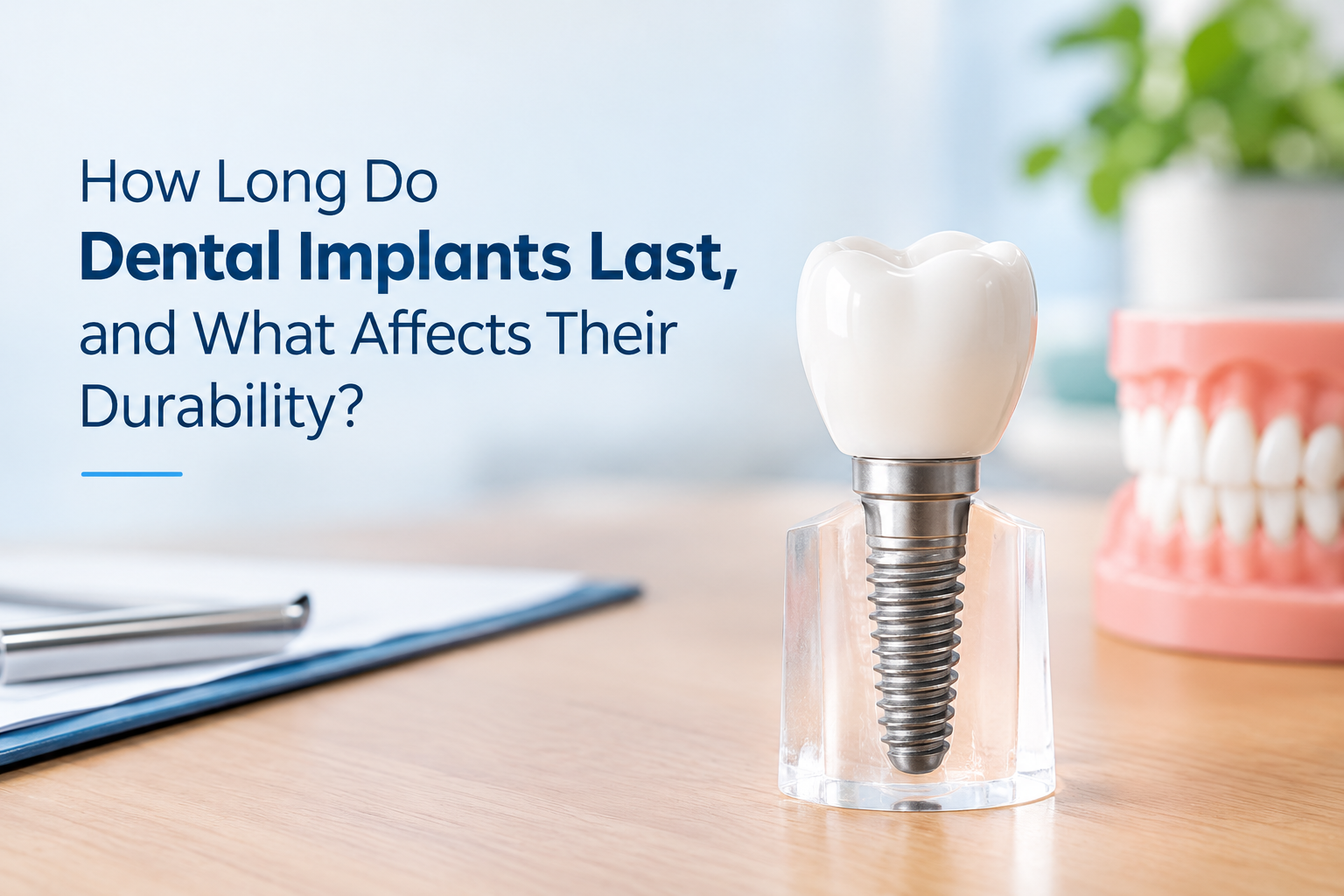
How Long Do Dental Implants Last, and What Affects Their Durability?
Have you ever had a situation where you lost your teeth and thought of replacement but were concerned about its durability? It is a very common thing to be worried about because you are spending money on your teeth that you wish will serve you for many years to come. Dental implants are very effective in replacing the missing teeth, but the longevity of their use depends on many other factors. At Noida Dental Solutions, knowing about these factors is of utmost importance while treating the patients. From brushing, to the health of gums and clenching, there are many such things that can influence the performance of an implant over the years.
Can Dental Implants Really Last for Many Years?
If you are getting a replacement for your missing tooth, then of course you want that tooth to remain with you. It is likely that you will not want to go through another procedure again after getting your replacement.
Dental implants are meant to be a long-lasting replacement for teeth. These implants comprise a small metal pole, which is often made of titanium, inserted into the jawbone. The bone then fuses with the implant, thus creating a platform for attaching an artificial tooth.
However, there is another aspect worth mentioning here. The thing is that the implant and the false tooth placed on the implant are two different things. An implant may stay with the patient for several decades; however, the crown may be destroyed over time.
However, there is no specific number of years that works for everyone. All your oral health, daily practices, bone strength, and proper dental care affect the results. Proper care for your implant since the very beginning will help you make the best out of your dental treatment.
What Everyday Habits Can Affect the Life of Your Implant?
Maybe you think that after your new tooth is installed, you can ignore it and get back to normal life. But actually, it really matters how you take care of your mouth on a daily basis.
Here are some common habits and conditions that can affect implant health.
Not doing adequate brushing: Food debris and plaque deposits may form around the implant, causing irritation of the gum tissues around the area.
Disregarding bleeding gums: It is not normal to have any kind of bleeding, swelling or tenderness around an implant.
Smoking: This habit may disrupt the process of healing of implants.
Teeth grinding or clenching: Pressure exerted on the crown or the implant may be damaging.
Not visiting the dentist for regular exams: Issues may occur without causing you any pain at all initially.
The best part is that these dangers can often be mitigated. Brushing at least twice each day, flossing between your teeth, not smoking, and heeding your dentist's suggestions can keep your gums healthy around your implant.
Does Gum Health Matter After Dental Implant Treatment?
Yes, and it matters even when your replacement tooth looks perfectly fine.
Even if natural teeth are capable of getting cavities, implant teeth cannot get cavities. However, the soft and hard tissues around the implant can still suffer from certain issues. There is the possibility of irritation caused by the bacteria in plaque, while peri-implantitis may attack the bone.
These symptoms include bleeding gums during brushing, discoloration around the implant site, swelling, and soreness while chewing. However, they are not always an indication that the dental implant is failing, but it needs to be inspected nonetheless.
In case there is any existing infection such as gingivitis, it would be wise to treat it before going ahead with implants. Anyone with an infected gum in Noida is supposed to let the dentist know about the state of their gums.
The maintenance of good health in the surrounding tissue not only aids in protecting the new tooth but also helps in maintaining good chewing ability and dental health.
Full Mouth Dental Implants: What Should You Know About Long-Term Care?
The experience of losing several teeth or having loose dentures can have a direct impact on one’s life in ways that one does not often mention. This may range from avoiding particular kinds of food to feeling uneasy about speaking while you eat.
Alternatively, Full Mouth Dental Implants might prove helpful for individuals in need of replacing all or most of their teeth. According to the treatment plan, a full set of new teeth may be mounted on implants positioned strategically.
Getting the treatment is one thing, but maintaining it is another. In order to keep it both comfortable and functional, proper maintenance is required.
Food debris could build up underneath certain fixed dental restorations, which makes their removal difficult as opposed to ordinary teeth. The dental practitioner can help you understand how to clean such areas, as well as what kind of brush should be used.
Also, bite pattern is an aspect that needs to be considered. Certain teeth overloading may lead to issues with restoration wear and tear and even destruction. With regular visits, your dentist will be able to check the condition of your teeth, gums, and implants.
Before you decide on this alternative, learn about its healing, cleaning needs, subsequent visits, and possible future maintenance. This way, you can be better prepared for the process.
Single Tooth Implant Treatment: How Can You Make It Last?
If only one tooth is missing, then there is no need for a procedure where several teeth must be replaced. This is where Single Tooth Implant Treatment comes into play as it is capable of replacing one tooth without depending on other teeth.
This involves putting the implant in the jaw bone and then putting the crown in. It is imperative for the dentist to examine the gum, the bone density, bite, and the overall state of the mouth prior to the implementation of this treatment process.
Once you have your replacement tooth inserted, include it in your daily oral care regimen. Gently brush near the gum line, and floss between the teeth, including the areas adjacent to the implant. Do not use your teeth for anything that may cause damage to the crown.
In case you wish to go for invisible braces treatment in Noida, you can discuss it during the consultation. It is important to understand that dental implants do not shift in the jaw bone like natural teeth.
A little attention to these details can help you protect your replacement tooth and avoid preventable problems.
When Should You Get Your Implant Checked?
Many people believe that there has to be pain before they see a dentist. In case of implants, this belief may not work all the time.
Be observant if you experience any bleeding, swelling, bad taste, pus discharge, painful chewing or a loose crown. Such signs may be attributed to different factors, and therefore, it is important for one to visit a dentist for a diagnosis.
For example, the looseness of the crown is not necessarily an indicator that there is any failure of the implant; the crown or the connecting part should be looked into. However, if the implant itself is loose, it should be checked immediately.
If there is anything abnormal, set an appointment instead of trying to sort it out on your own. Early sorting out of something might prevent a little problem from becoming a major issue.
Frequently Asked Questions
1. Can dental implants last a lifetime?
But even they have the capability to function for decades on end, there is no way that any dentist can assure that implants will last forever.
2. Will I need to replace my implant crown?
Maybe. The crown can get worn down, cracked, or loose even when your implant post is doing fine. Your dentist will be able to tell whether it requires repairs or not.
3. Can I eat normally after getting an implant?
After you have fully healed and the dentist has told you that you can start eating normally again, you will be able to eat almost any food. Just remember what your dentist has told you when you were recovering from the procedure.
4. Is it normal for an implant to bleed while brushing?
Bleeding should not be ignored at all because this can be caused by an inflammatory process that surrounds the implant.
5. How can I protect my implant as I get older?
Keep up with brushing and flossing your teeth, visit the dentist regularly, and consult for any changes in your gums or bite. Your dentist can revise your plan for upkeep according to your changing requirements.
Conclusion
The task of replacing a tooth is much more than simply replacing the gap in your smile. It is about having comfort when you eat, talk, and perform your daily activities without having to worry about your teeth. A Dental Implants could be one way of getting this done, but its longevity will depend on how well the procedure has been planned and what kind of healing you are getting after the procedure, along with your post-procedure care. At Noida Dental Solutions, we can guide you with tooth replacement and post-replacement care.