
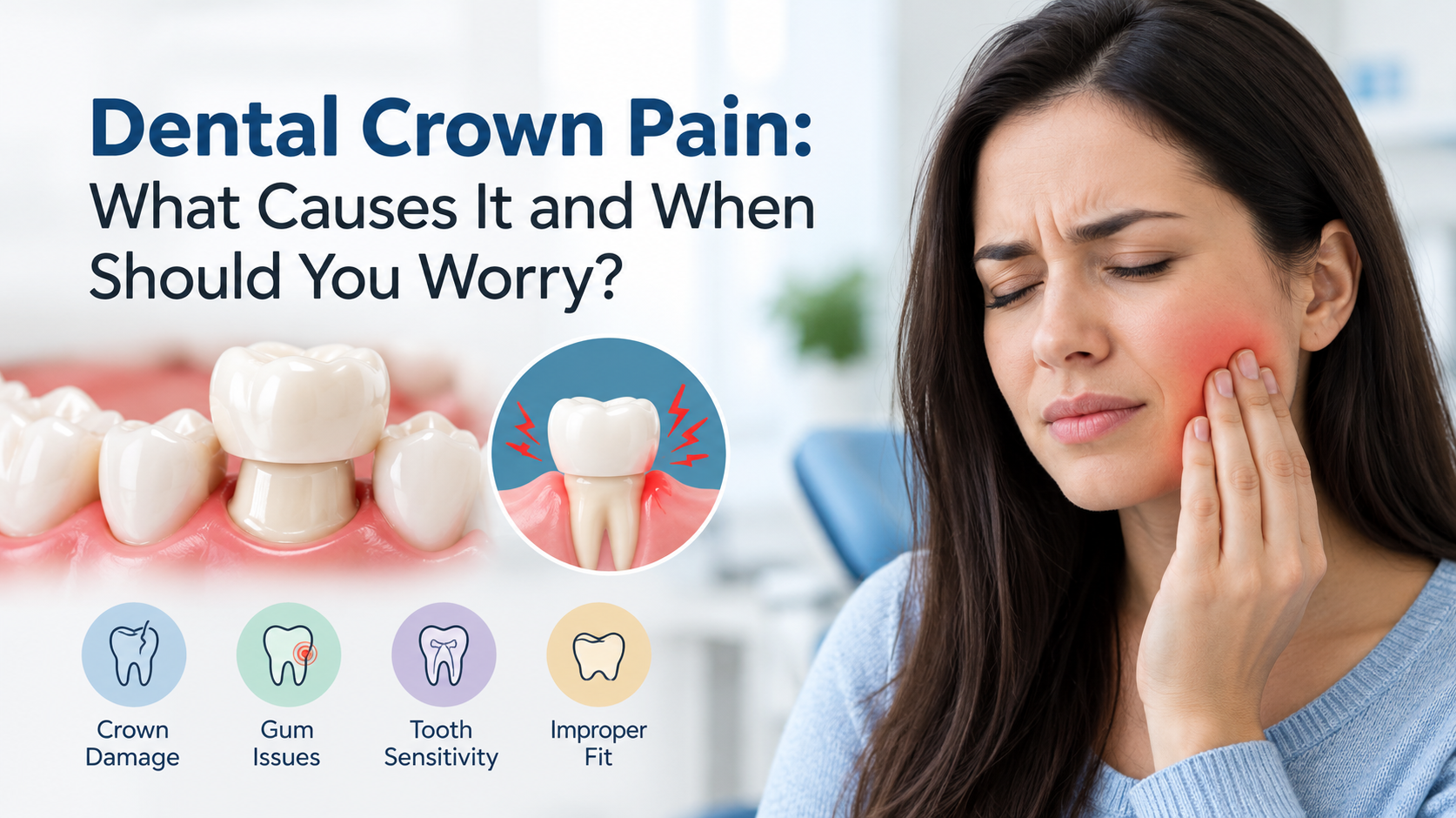
Dental Crown Pain: What Causes It and When Should You Worry?
Are you feeling any kind of pain in your teeth that are capped with dental crowns? While it is true that there can be some degree of sensitivity after getting a dental crown, pain that continues even months after getting one is something you shouldn’t overlook. Dental Crown Sensitivity could be caused by improper bite alignment, inflamed gums, tooth decay, or any problem below the dental crown.
Getting to know the possible causes will make it easier for you to determine when you need to see a dentist. If you are interested to learn more about Dental Crowns and Bridges in Noida, recognizing the symptoms is a good starting point.
What Causes Pain in a Tooth With a Dental Crown?
A dental crown is placed on a compromised tooth with the goal of increasing the strength of the tooth and returning the tooth to its original form and function. However, simply placing a crown on a tooth does not guarantee that the tooth will have no further dental problems.
There may be pain after the treatment. In other instances, a tooth that hasn't been giving any pain over the years suddenly begins to hurt. There are some clues on when, how much, and what kind of pain it is, but only a trip to the dentist can reveal the reason.
Common reasons include:
Problems with bite alignment: If the crown is higher compared to other teeth, it might be subjected to more pressure while chewing.
Gum irritation: Irritated gums around the crown can get swollen and tender or bleed while brushing.
Tooth cavities: Bacteria can cause cavities at the edge of the crown.
Cracked tooth: Any cracks on the remaining tooth will cause pain when biting and releasing the bite.
Nerve problem of tooth: If the tooth has not been subjected to root canal treatment, the nerve can become irritated or infected.
This Crown may also eventually weaken, or even be damaged. It is important to identify the real cause of the problem because it will affect the solution that will be taken.
Tooth Pain Under Crown: What Could Be the Reason?
Pain Under Tooth Crown may include dull pain, sharp pain, pain when biting down, or pain from hot and cold temperatures. Despite the fact that the crown covers most of the natural tooth, the tooth itself and the tissues in the tooth root may have problems.
Decay at the crown margin is another cause. In cases when this particular part cannot be kept clean or if there is a problem with the seal, bacteria can play a role in causing the decay. Loose crown or failed crown cement are other causes for sensitivity.
Another one would be an inflamed root. In some instances, the bacteria may form an infection that may develop into a dental abscess. The consequences of this infection would be constant pain, swelling, bad taste, or sensitivity while biting.
The dentist will assess the crown, check your bite, conduct tests on the surrounding tissues, and take a dental X-ray if needed to see whether the issue is related to your gums, the tooth root, the rest of the tooth, or the crown.
Don't keep chewing on the painful side or try to fit your loose crown yourself. In case the pain persists, book an appointment with your dentist instead of waiting for it to resolve.
When Is Dental Crown Sensitivity Normal, and When Is It a Warning Sign?
Mild Dental Crown Sensitivity is one condition that arises after putting on a dental crown especially if the tooth had been prepared. The tissues around it may take some time to settle down and become sensitive to temperatures or pressure.
However, pain should normally get better rather than worse. It is concerning when someone experiences pain well after the procedure when the tooth was pain-free before.
Pay attention to these warning signs:
The pain that becomes severe, increases, or frequently disturbs you during the night time.
Pain upon biting down and when pressure is relieved.
Swelling around the gums, pus formation, and bad odor around the crown.
Loosening, cracking, and changes in the crown while closing your mouth.
Sensitivity to hot and cold conditions.
However, it does not necessarily mean that the crown has failed. For instance, a crown that is too high can simply be adjusted, whereas a crown with decay or infection requires treatment.
Any symptoms of facial swelling, fever, and trouble opening your mouth should lead to an immediate evaluation by a dentist. Trouble breathing or swallowing combined with facial swelling will require immediate medical attention.
How Do Dentists Diagnose and Treat Crown-Related Pain?
The treatment will depend on the findings of the examination. The dentist will inquire when the pain began, if it happens while chewing food, and if changes in temperature aggravate the pain.
The examination is continued to check for any issues such as damage, looseness, inflammation or decay. Bite analysis and dental imaging are important tools in diagnosing any problems that may be difficult to diagnose through a normal visual examination.
Possible treatment options include:
Crown adjustment: In case the crown is excessively high, adjusting its bite will eliminate excessive pressure.
Gum treatment: Improving gum-cleaning methods or even treatment can be considered in the case of gum irritation.
Decay treatment: Depending on the location and condition of the decay, the dentist might prescribe restorative procedures.
Root canal treatment: If the tooth nerve is severely irritated or infected, root canal treatment might be required.
Crown replacement: Damaged, ill-fitting or inadequate crown needs to be replaced after the problem is resolved.
It is not necessary for all painful crowns to be replaced. It is possible to treat them without removal of the crown at times. Patients can have their symptoms evaluated at Noida Dental Solutions with the correct diagnosis.
Can You Prevent Pain After Getting a Dental Crown?
Not all complications may be avoided; however, regular oral hygiene can help lower the chances of complications arising in relation to the crown.
Use a fluoride toothpaste and brush two times a day. Floss once a day to ensure that your teeth stay healthy. It is also necessary to concentrate on cleaning the gum line surrounding the crown.
Do not bite into any hard substances, including ice and shell foods, especially when you suffer from broken teeth. In case you clench your teeth in your sleep, consult your dentist regarding a mouth guard.
If you have just had a crown fitted, make sure you follow the aftercare advice given by your dentist. Do not think that the pain is only due to the adjustment period; let your dentist know about any persistent pain or an uneven bite.
Those who are searching for the Best Dentist in Noida can find it useful if they search for a dentist who diagnoses the reason for their pain and gives them all their options other than suggesting crown replacement immediately.
Frequently Asked Questions
1. Is it normal for a dental crown to hurt years later?
Just because there is new pain does not mean that it is a normal process. Issues such as tooth decay, a tooth fracture, periodontal disease, or an infection may occur many years after crown installation.
2. How long does sensitivity last after getting a crown?
If the problem is just mild sensitivity, it will go away over a period of days or weeks. However, if the problem escalates, do not hesitate to reach out to your dentist.
3. Can a tooth get infected under a dental crown?
Yes. Bacterial infections can develop around the edges of the crown or inside the tooth. The infection can take place even though the crown appears normal on the exterior.
4. Does crown pain always mean the crown needs replacement?
Not at all. The reason could be high biting, gum infection, or something else that can be fixed. Replacement is done if there is damage to the crown or if the crown doesn’t fit.
5. What should I do if my crowned tooth hurts when chewing?
It is advised that you refrain from putting any undue stress on the tooth and get yourself checked by your dentist. The pain during chewing could be caused due to misalignment of teeth, a crack, inflammation, or an infection.
Conclusion
There are different reasons for the pain experienced near the crowned tooth, some of which include temporary sensitivity to the procedure performed on the tooth, tooth decay, misaligned bite, and infections. The sudden onset of Dental Crown Sensitivity, chronic sensitivity, and worsening of the condition should all be examined instead of being overlooked. Proper dental hygiene and visiting the dentist for check-ups on a consistent basis may prove helpful in protecting the crown and the underlying tooth from any issues. Should you suffer from prolonged sensitivity, pain, or swelling while chewing, then you should visit a dentist for consultation about the cause and treatment of your problem.