
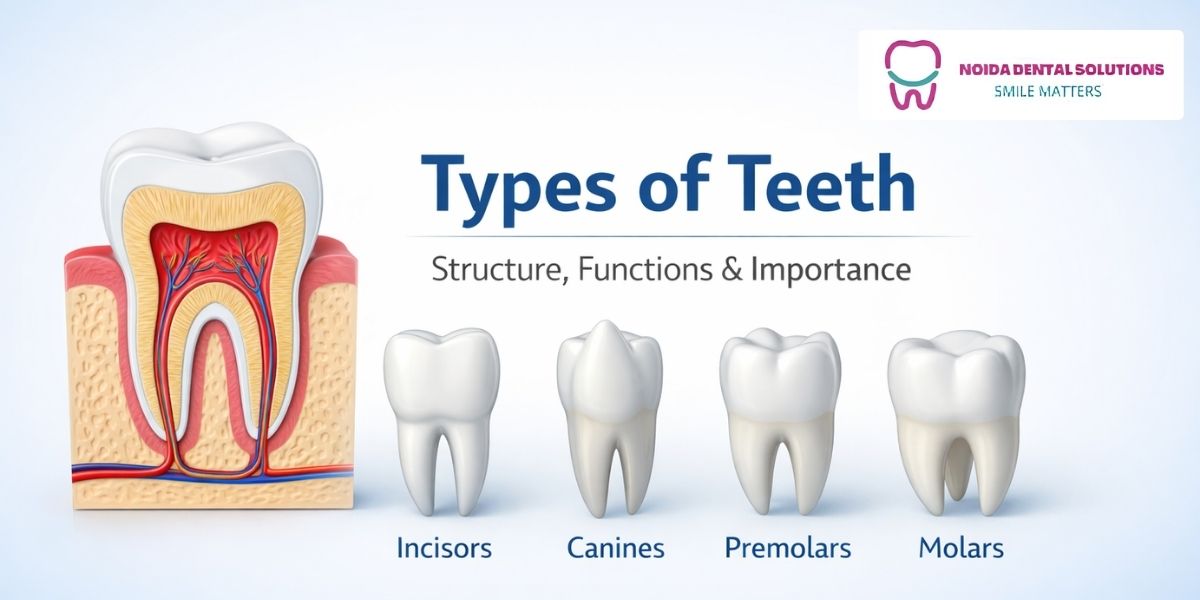
4 Types of Teeth
Your teeth do much more than help you smile in photos. They actively support eating, speaking, and maintaining your overall health. When people search for types of teeth, they often expect a quick answer, but the reality involves a fascinating system designed for efficiency.
If you’ve ever consulted a Best Dentist In Noida, you may have noticed that dental professionals focus not just on cleaning teeth but on understanding how each tooth functions. Whether you’re considering Dental Implant Treatment In Noida or improving alignment, knowing your teeth gives you a clear advantage.
Let’s explore the types of teeth in human anatomy and understand how they work together.
Why Teeth Are Essential for Overall Health
Teeth play a direct role in digestion. The mastication process in humans begins in the mouth, where teeth break food into smaller pieces. According to the American Dental Association, proper chewing improves nutrient absorption and reduces digestive strain.
Beyond digestion, teeth:
Support clear speech
Maintain facial structure
Help prevent jaw issues
Ignoring dental health doesn’t just affect your mouth, it impacts your entire body.
Basic Overview of Tooth Types in Adults
So, how many types of teeth do adults have?
Humans have four main types of teeth:
Incisors
Canines
Premolars
Molars
This system reflects the classification of human teeth and forms the foundation of human dental anatomy. Adults typically have 32 teeth, divided among these categories.
How Teeth Work Together in the Mouth
Your teeth don’t work alone. They operate as a coordinated system within the oral cavity structure. Each type performs a specific task, but together they ensure efficient chewing and proper occlusion and bite function.
For example:
Incisors cut
Canines tear
Premolars crush
Molars grind
This teamwork defines the tooth morphology and function relationship in humans.
Overview of the 4 Types of Teeth
Let’s briefly introduce the different types of teeth before diving deeper.
These are the 4 types of teeth and their functions, each playing a distinct role.
Incisors – The Cutting Teeth
Structure and Location of Incisors
Incisors sit at the front of your mouth. They have a flat, sharp edge designed for cutting. Each incisor typically has a single root, making it stable yet precise.
Adults usually have eight incisors, four on top and four on the bottom.
Primary Function in Biting and Speech
Incisors handle the first step of eating: biting into food. They also help form certain sounds when you speak, making them essential for communication.
Their role in the functions of incisors canines premolars molars becomes clear right from the first bite.
Common Dental Issues Affecting Incisors
Incisors often face:
Chipping
Cracks
Sensitivity
Since they sit at the front, they experience more impact. Treatments like Smile Makeover Treatment In Noida often focus on restoring these visible teeth.
Canines – The Tearing Teeth
Sharp Structure and Pointed Shape: Canines have a pointed shape and the longest roots among all teeth. Their design allows them to handle pressure effectively.
Role in Holding and Tearing Food: Canines grip and tear food, especially tougher textures. They act as anchors and guide proper bite alignment. Their role becomes crucial in maintaining occlusion and bite function.
Importance in Facial Structure and Alignment: Canines support facial symmetry and alignment. Dentists often prioritize them during teeth Aligners treatment in Noida because they influence how other teeth position themselves.
Premolars – The Transition Teeth
Position Between Canines and Molars: Premolars sit between canines and molars, acting as a bridge. Adults typically have eight premolars.
Function in Crushing and Grinding Food: Premolars crush and begin grinding food. They support the role of different teeth in chewing and digestion by preparing food for molars.
Differences Between First and Second Premolars: First premolars often have sharper edges, while second premolars have a flatter surface for grinding. This variation improves efficiency in the chewing process.
If premolars are lost, treatments like Dental Implant Treatment In Noida help restore balance in your bite.
Molars – The Grinding Powerhouses
Structure and Large Surface Area: Molars are the largest teeth with broad, flat surfaces and multiple roots. Their structure supports heavy chewing forces.
Role in Chewing and Digestion: Molars grind food into a paste, making it easier to swallow and digest. According to the NHS, proper grinding reduces digestive workload and improves nutrient absorption.
Wisdom Teeth as Third Molars: Wisdom teeth are the third set of molars. They often cause issues due to limited space, leading to impaction or misalignment. If you’ve experienced molar pain, you probably searched for a Best Dentist immediately, because molars don’t tolerate neglect.
How the Four Types of Teeth Work Together
Coordination During Chewing Process: The chewing process starts with incisors and ends with molars. Each tooth type contributes in sequence, creating an efficient system. This coordination defines the mastication process in humans.
Role in Digestion and Nutrient Absorption: Proper chewing improves digestion. When teeth break food effectively, the stomach processes nutrients more efficiently. This highlights the importance of dental anatomy and tooth function in overall health.
Impact on Speech and Facial Shape: Teeth influence speech clarity and facial appearance. Missing or misaligned teeth can affect both. If you’re exploring solutions, you can check Noida Dental Solutions on Google My Business to find reliable dental care options in your area.
Why Understanding Tooth Types Matters
Importance for Oral Hygiene and Care
Knowing your types of teeth and their functions helps you clean them properly. Molars need extra attention due to grooves, while incisors require gentle care.
Preventing Dental Problems Early
When you understand your teeth, you can spot issues early. Regular visits to a Best Dentist In Noida help prevent serious problems.
Conclusion: Why Understanding the Types of Teeth Matters
The 4 types of teeth and their functions form the foundation of your oral health. Each type, incisors, canines, premolars, and molars, plays a specific role in chewing, speaking, and maintaining facial structure.
Understanding the different types of teeth allows you to take better care of your oral health and make informed decisions about treatments. Whether you need preventive care or advanced procedures like Dental Implant Treatment, awareness always comes first.
If you’re noticing discomfort, misalignment, or any dental concerns, don’t wait for it to get worse. Book a consultation with a trusted specialist and get a clear treatment plan tailored to your needs. You can connect with the Best Dentist at Noida Dental Solutions for expert guidance, advanced care, and a healthier smile that lasts.