
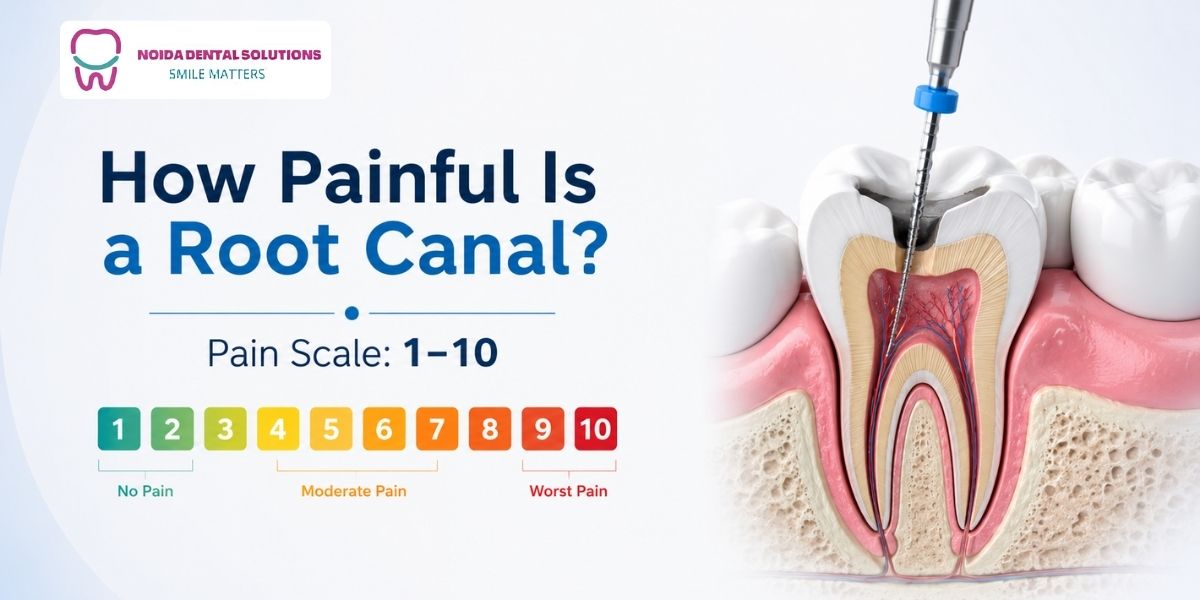
How Bad Does a Root Canal Hurt on a Scale of 1–10?
If you searched “how bad does a root canal hurt 1-10, chances are you’re already dealing with an angry tooth. Maybe you cannot sleep. Maybe cold water feels like betrayal. Or maybe someone told you a root canal feels like medieval torture.
Here’s the truth: modern root canal therapy is far less painful than the infection that leads to it.
Most patients rate the actual procedure between 2 and 4 out of 10 when proper numbing works. The severe pain usually comes before treatment, not during it. According to the American Association of Endodontists, modern root canal treatment feels similar to getting a regular filling for many patients.
If you are searching for the best dental clinic in Noida, choosing an experienced dentist or endodontist matters a lot. A skilled specialist reduces discomfort, explains every step clearly, and helps nervous patients feel calm before treatment begins.
Why Root Canals Have Such a Terrible Reputation
Let’s blame old stories, dramatic movies, and one relative who still talks about a dental appointment from 1998.
The fear of root canal pain usually comes from outdated experiences. Years ago, dental technology and local anesthesia were less advanced. Today, dentists use modern anesthetics, digital imaging, rotary dental instruments, and better oral pain management techniques.
Still, many people feel:
anxiety about root canal procedures
fear of tooth nerve pain
concern about anesthesia effectiveness
panic about dental surgery
nervousness before root canal appointments
That fear feels real. But science tells a different story.
The Mayo Clinic explains that root canal treatment today causes little or no pain for most patients because dentists use effective local anesthesia and modern treatment methods.
So, How Bad Does a Root Canal Hurt on a Scale of 1–10?
Let’s break it down honestly.
Before the Procedure: 8–10/10
An infected tooth can create unbearable pain. A pulp infection inside the dental pulp often causes:
Throbbing pain after root canal symptoms begin
Sharp pain while chewing
Gum inflammation
Jaw pain
Tooth sensitivity to hot or cold
Swelling near the infected tooth
Dental abscess formation
This stage hurts the most.
The inflamed pulp and tooth nerve pressure can create painful root canal symptoms that make eating, sleeping, and concentrating difficult. Many patients finally book an appointment because the infected tooth root canal pain becomes impossible to ignore.
According to the American Association of Endodontists, untreated pulp infection can spread and lead to severe complications if ignored.
During the Procedure: Usually 2–4/10
Here is the part most people misunderstand.
Does a root canal hurt during the procedure? Usually, no.
Your dentist or endodontist numbs the tooth and surrounding area using local anesthesia. Once the tooth becomes numb, patients mostly feel:
pressure
vibration
movement
mild discomfort
They usually do not feel sharp pain.
A modern root canal treatment involves:
Taking a dental X-ray
Numbing the area
Using rubber dam isolation
Removing infected dental pulp
Cleaning the pulp chamber and root apex
Sealing the canals
Restoring the tooth with a dental filling or dental crown
The process sounds dramatic, but the pain level often surprises patients in a good way.
One funny reality? Many people walk into the dental clinic terrified and walk out saying, Wait, that was it?
After the Procedure: 3–5/10
Does root canal treatment hurt after treatment? Mild soreness can happen for a few days.
Root canal discomfort after procedure sessions usually comes from inflammation around the treated tooth. The tissues near the root apex may remain irritated temporarily.
You may notice:
root canal sensitivity after treatment
mild jaw pain
tenderness while chewing
temporary crown discomfort
root canal recovery pain
Most patients manage symptoms with ibuprofen or other dentist-approved medication.
The American Association of Endodontists. states that mild sensitivity for a few days is common, especially when an infection existed before treatment
Does Root Canal Hurt Without Anesthesia?
Now we reach the nightmare scenario everyone Googles at 2 AM.
How bad does a root canal hurt without anesthesia?
Honestly, very badly.
Without numbing medication, cleaning an inflamed pulp and exposed tooth nerve would feel extremely painful. That is why dentists always use local anesthesia unless rare medical conditions prevent it.
In severe nerve infection cases, anesthesia may sometimes work less effectively because infection changes tissue acidity levels. Some patients with serious dental abscess issues report temporary discomfort until additional numbing takes effect.
An experienced endodontist knows how to handle these situations safely.
So if you worry about a root canal without numbing, relax. Modern dentistry does not work like horror stories from the internet.
Why Some Root Canals Hurt More Than Others
Not every tooth behaves the same way.
Several factors influence root canal pain level:
1. Severity of Infection: A deeply infected tooth with swollen nerves usually feels more sensitive before treatment.
2. Tooth Location: Molars often contain multiple canals, making treatment more complex than front teeth.
3. Cracked Tooth or Deep Decay: A cracked tooth or advanced tooth decay can increase inflammation around the pulp chamber.
4. Anxiety and Stress: Root canal fear and stress can amplify pain perception. Patients with dental anxiety treatment needs often feel more tension before appointments.
5. Dentist Experience: A skilled endodontic treatment specialist improves comfort significantly.
If you need reliable root canal treatment in Noida, experienced clinics like Noida Dental Solutions often use advanced imaging and modern techniques to improve patient comfort. You can also check their Google My Business profile location before booking an appointment.
Signs You May Need a Root Canal
You may need root canal therapy if you notice:
severe tooth pain while chewing
lingering tooth sensitivity
swollen gums
darkening tooth enamel
pus near gums
inflamed pulp symptoms
dental emergency pain
cracked tooth discomfort
nerve infection signs
The Cleveland Clinic notes that an untreated infection can spread to nearby tissues and create bigger oral health problems.
Root Canal Pain After Crown: Is It Normal?
Sometimes patients feel root canal pain after crown placement.
A permanent crown or temporary crown may cause mild pressure if:
Your bite feels uneven,
The surrounding gums remain inflamed
And nearby nerves stay irritated temporarily
Minor discomfort often improves quickly. Persistent pain deserves evaluation.
Your dentist may adjust the dental crown or examine the tooth restoration carefully.
Root Canal vs Tooth Extraction: Which Hurts More?
Many people think removing the tooth sounds easier.
Usually, saving the natural tooth creates better long-term oral health outcomes.
Root canal therapy helps preserve:
chewing ability
jaw structure
natural tooth alignment
surrounding tooth enamel
The American Association of Endodontists explains that preserving natural teeth often remains the best option whenever possible.
Tooth extraction may require implants, bridges, or oral surgery later.
How Dentists Reduce Root Canal Pain
Modern dental clinics use several comfort techniques:
Local Anesthesia: The most important pain-control method.
Sedation Dentistry: Helpful for patients scared of dental pain or severe anxiety about root canal treatment.
Digital Dental X-Ray Technology: Improves treatment accuracy.
Rotary Dental Instruments: Allow smoother and faster canal cleaning.
Better Oral Pain Management: Dentists now understand root canal pain management far better than in previous decades.
That is why many patients who feared a painful dental experience later admit the procedure felt easier than expected.
When Should You See a Dentist Immediately?
Book an urgent visit if you notice:
Facial Swelling
Intense Jaw Pain
Spreading Infection
Fever
Severe Pressure
Uncontrolled Throbbing Pain
Difficulty Swallowing
A dental emergency involving pulp infection should never wait too long.
If you are searching for the best dental clinic in Noida, choose a clinic with experienced endodontists, emergency support, modern technology, and strong patient reviews. Many patients looking for root canal treatment in Noida prefer clinics that clearly explain procedures and focus on comfort instead of fear-based marketing.
Final Verdict: How Painful Is a Root Canal Really?
Here’s the honest answer.
The infection hurts more than the treatment.
For most people:
before treatment: 8–10/10
during treatment: 2–4/10
after treatment: 3–5/10 temporarily
Modern root canal therapy exists to remove pain, not create it.
So if you feel worried about root canal procedures, remember this: dentists perform millions of successful root canals every year using safe anesthesia, advanced tools, and predictable treatment methods.
And yes, the sound of dental instruments may still feel annoying. Nobody enjoys hearing zzzzzz near their face. But compared to nonstop infected tooth pain at midnight? Most patients choose the root canal every single time.
If you are dealing with tooth pain, sensitivity, or signs of infection, don’t wait until the discomfort becomes unbearable. Contact Noida Dental Solutions today to schedule a consultation with an experienced dental expert and learn more about comfortable and advanced root canal treatment in Noida. Early treatment can protect your natural tooth, reduce pain faster, and help you avoid bigger dental problems later.